
We Buy Gold & Silver
God’s Money is a family-owned business that evaluates rare coins, jewelry, gold, silver, and platinum. We’ve provided our customers with honest, friendly advice and free evaluations for years.
Precious Metals & Coin Dealer
in Longview, Texas
God’s Money Gold & Silver is a family owned and operated business.
Our family’s goal and purpose is to serve you in all of your Gold and Silver purchasing/selling needs.
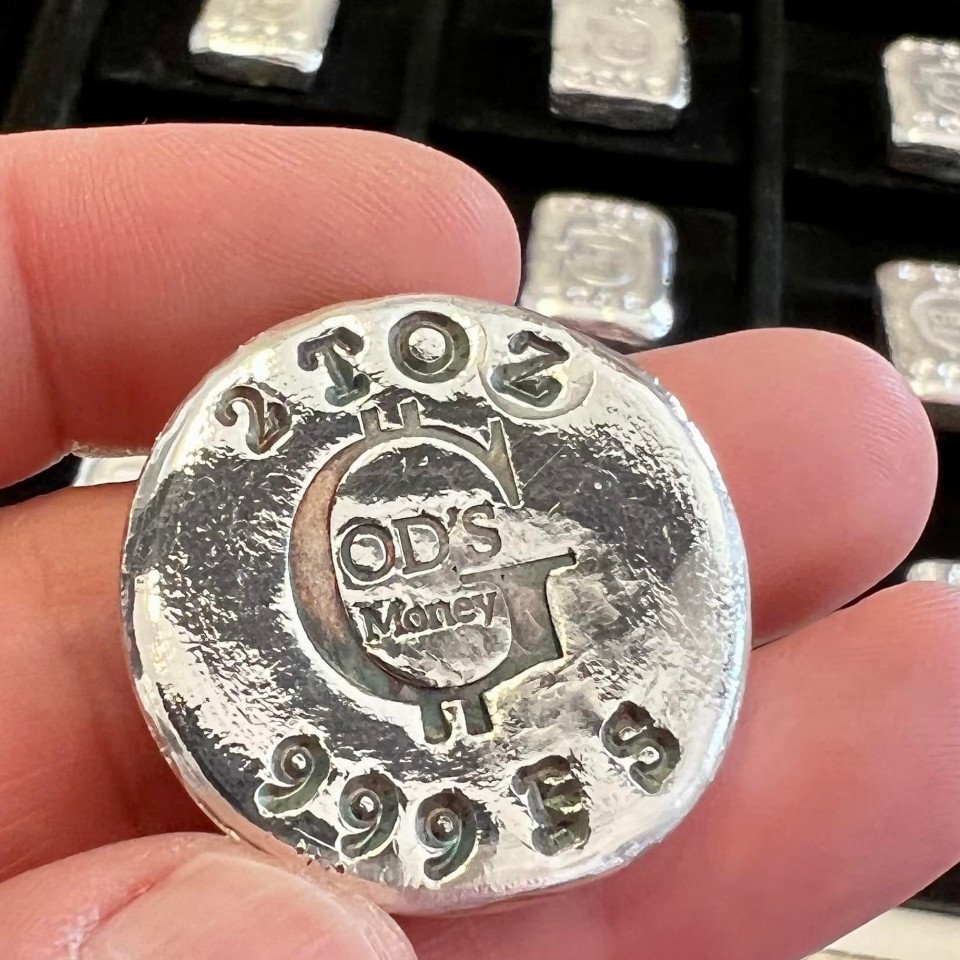
We sell and buy Gold and Silver bullion, coins, rounds and 90% Constitutional (junk) silver.
We have worked very hard at building a network of dealers which allow us to pay the best price for your Gold and Silver Jewelry.
When needed, we provide you with cash at the time of your sale or check that is ready to deposit directly into your account. On the unusual occasions where your collection is larger than our ability to provide same day funds, we make your payment our priority (maximum time 7 to 10 days and many times next day).
Whether you come to our Longview, Marshall or Tyler Shop I and my family will gladly serve you as we ourselves would want to be served.



Who We Are
Please allow me to begin my introduction by explaining the name I chose many years ago to describe the business and our service philosophy. Obviously God doesn’t need “money” but He created us with a diversity of needs. One common need is “community.” God gifted each of us with different skills and abilities. You may be a mechanic and someone else a carpenter. You may need a carpenter to fix your house but he doesn’t need a mechanic so rather than bartering your services he needs to be paid in a form that everyone agrees has “true value” (money). He then can take your payment to the farmer and buy beef and vegetables. Rather than God leaving the decision up to us to come up with an idea for money, He provided it for us and, I believe, put it in our hearts to value Gold and Silver. Just like he gave us thirst to drive us to drink water and hunger to drive us to eat food that provides us with the energy we need to work. Haggai 2:8 God states that the Silver and Gold are His. The “Streets of Heaven,” by His design, are pure Gold. Many whom God blessed “monetarily” throughout the Old Testament were blessed with Gold (Job for example).
As for me, Hi, I’m Sam Manning. Raised in a Baptist pastor’s home and was a pastor/church planter for over 15 years. Then served 8 years as a Police Officer in Marshall, TX. I take a more Biblical approach to Gold and Silver and am passionate in helping customers store their “wealth” in the only “money” that is “real.” I have been blessed with the privilege of bringing all three of my children, Bobby, Darcy and Kurtis into the business to serve our customers in the same unique style. Together we are here to provide insight, wisdom and education to offer direction and additional advice in your selling and purchasing decisions. Call or come visit each of us at one of our three locations, Longview, Marshall and Tyler.
What We Buy
God’s Money buys and sells Gold and Silver Coins and trades gold and silver products, coin collections, and antique jewelry. We offer the best pricing, unrivaled honesty, and customer respect. We buy and sell a variety of bullion products, including:

SILVER & GOLD
Silver & gold bullion bars are an excellent long-term investment. We buy and sell all types of gold and silver bullion, bars, coins, vintage cutlery, tea sets, and more!

JEWELRY
Estate, heirloom, old, or new jewelry, we buy and sell it all! Work with a trusted local shop that offers excellent prices. Safe and secure, get the best price in East Texas from God’s Money.

RARE COINS
Our owner has been collecting coins his whole life. You always know more about what you love. Enjoying collecting coins and buying gold coins is just part of our journey. We believe in treating our customers with respect and ensuring they get the very best price possible for their Gold or Silver coins.
Frequently Asked Questions
What is Bullion?
Bullion refers to the bulk form of precious metals, typically gold or silver. These metals can be cast into ingots or minted into coins, with the latter often done by governments. Beyond being a financial investment, bullion represents a tangible link to history, showcasing craftsmanship and offering a unique means of preserving wealth. Its value constantly changes, based on macroeconomic conditions and investor sentiment.
Types of Bullion
Bullion is not limited to just gold. Other precious metals like silver, platinum, and palladium are also cast into bullion forms. These metals have distinct properties, making them valuable for various industrial applications, as well as investment.
Silver bullion, for instance, is popular for its affordability and potential for growth, while platinum and palladium are prized for their rarity.
Different forms of bullion, such as bars, rounds, and coins, cater to diverse preferences and investment strategies. While bars might be preferred by large-scale investors for their efficiency in storage, coins offer aesthetic appeal and historical significance. Understanding the various types of bullion helps investors and collectors make informed choices to suit their unique needs and interests.
Investing in Bullion
Investing in bullion can be a sound financial strategy, offering a hedge against inflation and economic uncertainty. Unlike stocks or bonds, bullion provides a tangible asset that has intrinsic value. Its price is driven by supply and demand fundamentals, often moving inversely to traditional financial markets.
Bullion investments can be made through physical ownership or financial products like exchange-traded funds (ETFs) backed by precious metals. Physical bullion offers the satisfaction of holding a tangible asset, while financial products provide liquidity and ease of trading.
Both approaches have their merits and risks, and prospective investors should consult with financial professionals to align their investment in bullion with their overall financial goals.
Collecting Bullion Coins
Collecting bullion coins goes beyond investment; it’s a passion and art form for many. These coins often feature intricate designs, historical motifs, and cultural significance. Collecting bullion coins can be an enjoyable hobby and a way to preserve history.
Some collectors focus on historical coins, while others seek limited edition releases from renowned mints. The thrill of discovery, the joy of ownership, and the potential for appreciation make collecting bullion coins a multifaceted and rewarding pursuit. Collaborating with reputable dealers, joining collector communities, and staying informed about market trends can enhance an aspiring collector’s experience.
Sell Your Bullion to God's Money Gold and Silver
Have bullion you’d be interested in selling? Visit us in person, or get in contact with us for more information.
Coin Library
EARLY COPPER COINS
In the days of this country’s Founding Fathers, colonialists used copper as standard currency. These coins include Colonials, half cents, large cents, and Hard Times Tokens. Large and half cents were the first coins produced by the United States Mint in Philadelphia under the authority of our federal government.
They are very rare due to their intermittent minting between 1793 and 1857. Half cents also have the notoriety of being the smallest face value for a coin in our nation’s history. In 1857, the United States Mint stopped producing half cents and replaced large cents with more manageable small cents.
SMALL CENTS
Rising copper and production costs in the 19th century made large cents an impractical and costly currency. In its place, the U.S. government began minting small cents.
For the first small cent design (1856–1858), the mint chose a Flying Eagle. Only 2,000 of these coins were produced in the first year, making them very rare in today’s marketplace. The coins themselves became far more common in 1857 and 1858, which helps explains their generally inexpensive prices in today’s marketplace.
The Indian Head cent followed the Flying Eagle. First minted in 1859, this coin underwent numerous redesigns and updates during its half-century existence.
In 1909, the government released the Lincoln Wheat cent. This coin, which lasted until 1958, is notorious for having the first design with a depiction of a real person. An image of the Lincoln Memorial in Washington, D.C., eventually replaced the wheat back image. In 2009, the United States updated the Lincoln cent to commemorate the 200th anniversary of Lincoln’s birth. The Lincoln cent today remains the most produced coin in the world.
QUARTERS
Quarters have been part of America’s currency for more than 200 years. Authorized in 1792, the first Draped Bust quarter appeared in 1796. More than 6,000 of these coins were struck. But then the quarter disappeared until 1804, when it returned for three years with small variations and low mintages. The quarter then disappeared again until 1815, when minting resumed of two variations of the Capped Bust design. Minting of the Capped Bust finally ended in 1838.
In 1838, the United Stated Mint introduced the Liberty Seated quarter. This first iteration had no motto above the eagle. In 1853, a second version appeared, replacing the first, with arrows at the date signifying a decrease in weight and rays around the eagle. The third variety, released one year later and only for two years, used arrows again, but did not have rays around the eagle. Eleven years later came a new version that included the addition of the motto “IN GOD WE TRUST” on the reverse. This version lasted seven years (1866–1873). The final version, containing arrows that signify the adoption of the metric system by the U.S. Mint, lasted eighteen years until 1891.
In 1892, the U.S. Mint introduced the Liberty Head, which was also known as the Barber quarter. Created by Charles Barber, this coin, along with the Barber dime, serves as one of the few examples of an American coin to take the name of the designer (as opposed to the primary design element). In 1916, the Standing Liberty quarter, featuring a bare-breasted Liberty in a long, flowing gown, replaced the Liberty Head design. From 1917 to 1930, a more modest version appeared in which Lady Liberty was covered in chain mail.
In 1932, the George Washington quarter first appeared. It lives on to this day. Originally designed to honor the bicentennial of the first U.S. president’s birth, Congress voted to make the new design a permanent replacement to the Standing Liberty quarter. The first version of this coin contained 90 percent silver. The Coinage Act of 1965 transitioned this purer version to a copper-nickel design. Since then, the coin has had several special series and types, including the Bicentennial (1975–1976), the State series (1999–2008), and most recently, the America the Beautiful program (2010–2021).
MODERN COMMEMORATIVES
In 1982, the United States Mint returned to producing commemorative coins with the release of a half dollar commemorating the 250th anniversary of George Washington’s birthday. Commemorative coins today typically recognize special occasions, one-of-a-kind structures, and famous people. Production of these coins is expected to continue for years to come.
Commemorative coins are legal tender, but they are not minted for general circulation. Instead, they are offered to collectors, and most of these special-issue coins are available only during the year in which they are first issued. Two of the most popular recent commemorative coins have been the American Buffalo in 2001 and the Benjamin Franklin commemorative coin in 2006.
TRADITIONAL COMMEMORATIVES
Many people consider the 1848 two-dollar gold piece, made to commemorate the first gold the U.S. mint received from the California Gold Rush, to be the first commemorative coin ever released. This coin, with “CAL” on the reverse design, was the smallest gold denomination in circulation at the time. Despite its low face value, the coin today commands a high price due to gold prices as well as the low mintage of the coin itself (only 1,389 were struck).
Many lists of classic U.S. commemorative coins begin with the World’s Columbian Exposition Half Dollar, which was released in 1892 and 1893 and produced in silver. The latter year also saw the first and only issue of the quarter dollar honoring Queen Isabella I of Spain. In 1900 the first commemorative dollar was released featuring George Washington and the Marquis de Lafayette.
In 1903 two types of gold dollars appeared—one featuring Thomas Jefferson and one featuring William McKinley—celebrating the Louisiana Purchase Exposition. Almost 250,000 of these coins were struck, but only 35,000 or so were offered to the public due to circulation abuses and inefficient processes, issues that plagued future commemorative releases.
In 1904 and 1905, the Lewis and Clark Centennial Exposition Gold Dollar was released, followed in 1915 by the Panama Pacific International Exposition five-coin series. The Panama Pacific series included a silver half dollar, a gold dollar, a gold $2.50 coin and two $50 gold pieces.
The U.S. Mint released numerous coins in the subsequent years to commemorate historic U.S. dates and occasions. The classic commemorative era of coins ended after the 1954 Carver-Washington Half Dollar.
What our customers are saying…
Get a FREE Evaluation
Before doing anything else, you should find out what your valuables are worth. So your first step should be to get a free evaluation at God’s Money in Tyler, Longview and Marshall, Texas.
You will get honest, detailed information with no pressure to sell. Every day we evaluate a lot of coins, coin collections, rare coins, and different things made of gold. But we also assess anything that contains precious metals, like antiques, watches, pocket watches, chains, necklaces, bracelets, earrings, heirloom jewelry, estate jewelry, and even broken jewelry.
Bring in your antique jewelry and see what it is worth; you might be surprised!